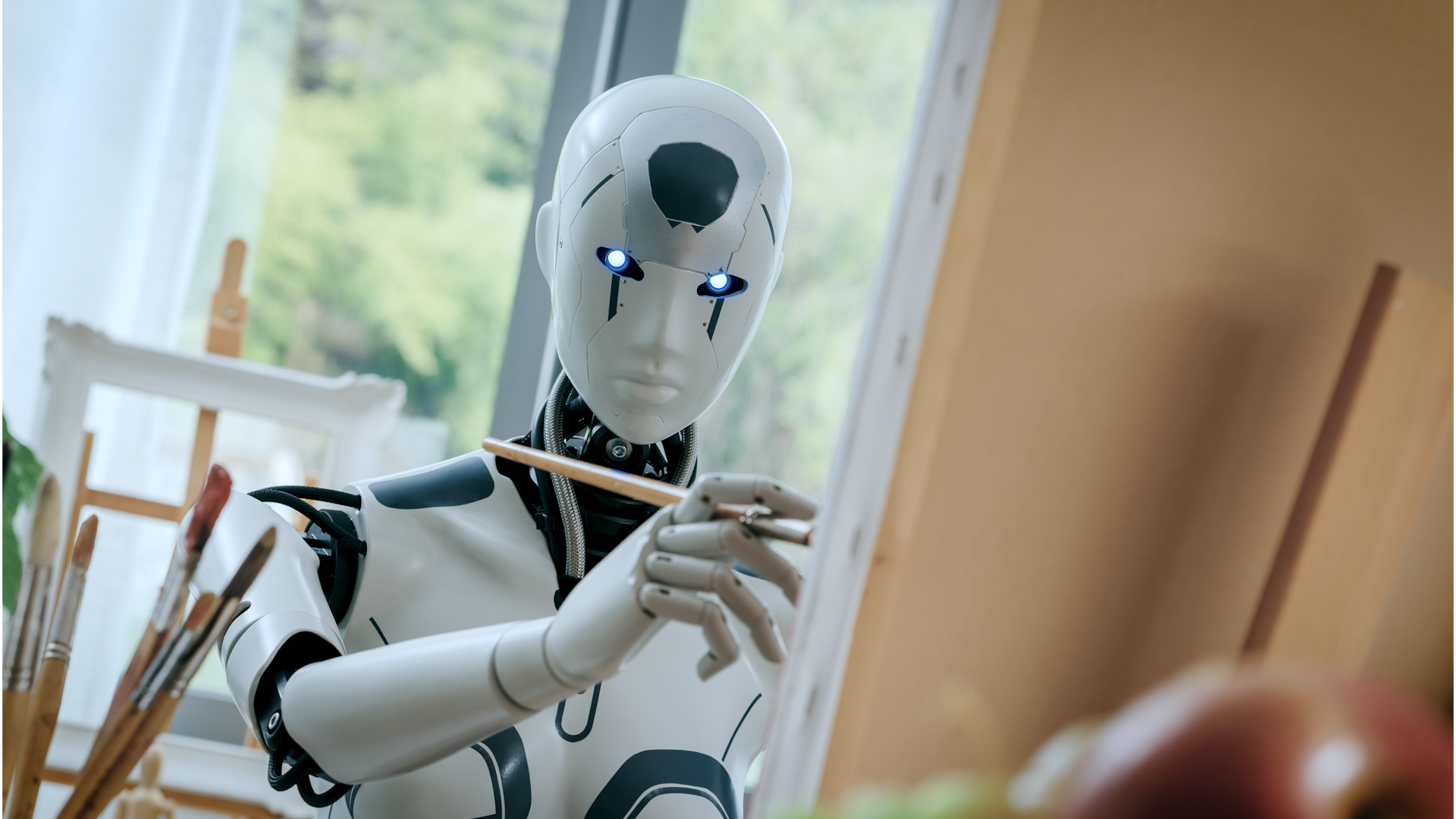
AI is changing the way companies approach innovation. Tasks that once required days or weeks of brainstorming, research, and concept development can now be completed in minutes. Teams can generate hundreds of ideas, renderings, feature combinations, and design directions faster than ever before. At first glance, this seems like a clear advantage. More ideas should lead to more innovation. But there is an important distinction between generating ideas and creating successful products.
The ability to imagine possibilities has become easier. Turning those possibilities into well-designed, human-centric products that can be manufactured, sold, supported, and scaled remains just as challenging as ever. In many ways, AI has not eliminated the hard part of product development—it has simply moved the bottleneck.
Download our free whitepaper, Why AI-Driven Concept Generation Fails Without Manufacturing Reality, to explore the growing gap between ideation and execution and why so many promising concepts never reach production.
For years, organizations struggled to generate enough ideas. Today, many face the opposite problem: an abundance of concepts and limited resources to determine which ones are truly worth pursuing. The reality is that products do not succeed because they look impressive on a screen. They succeed because they work in the real world.
Every product must navigate a long list of practical considerations. Materials behave in specific ways. Manufacturing processes introduce limitations. Costs influence decisions. Regulatory requirements must be satisfied. Products must be assembled, tested, packaged, shipped, supported, and maintained. These realities ultimately determine whether an idea becomes a successful product or remains an interesting concept.
This is where organizations can run into trouble when they view artificial intelligence as a replacement for human creativity and experience rather than a tool to support them. AI excels at rapidly generating possibilities. What it cannot replicate is the collective experience that comes from years of solving real-world problems.
Anyone can ask AI to produce 400 product concepts. What is far more difficult is generating 400 meaningful concepts informed by decades of thoughtful design, engineering knowledge, customer insights, manufacturing expertise, and lessons learned from previous successes and failures. That type of innovation rarely comes from a single source. It emerges through collaboration.
Some of the most valuable ideas are born when people with different backgrounds and perspectives work together to solve a problem. Engineers, designers, manufacturing specialists, marketers, technicians, and end users each bring a unique viewpoint to the discussion. The interaction between those viewpoints often creates solutions that no individual—and no AI system operating independently—would have discovered.
Human creativity is not simply the generation of ideas. It is the ability to connect unrelated experiences, challenge assumptions, recognize opportunities, and apply knowledge gained in one domain to solve problems in another.
As AI becomes more prevalent, organizations are also beginning to ask important questions about intellectual property and information security. What happens to proprietary information entered into AI systems? How is that information stored? Who owns the resulting outputs? What protections exist to prevent sensitive concepts from being reused elsewhere?
These are not reasons to avoid AI, but they are important considerations for companies developing new products, technologies, and intellectual property. None of this suggests AI should be ignored. Far from it.
Striking a Balance
AI is a powerful tool. It can accelerate research, support brainstorming efforts, explore alternatives, and improve efficiency throughout the development process. Organizations that learn to use it effectively will likely gain meaningful advantages. The greatest opportunity, however, is not replacing human creativity with artificial intelligence. It is combining the strengths of both. AI can help teams explore possibilities faster. Human expertise determines which possibilities are worth pursuing and how to transform them into products that can succeed in the marketplace.
The future of innovation is not artificial intelligence versus humans. It is AI-enhanced exploration combined with human judgment, experience, collaboration, and execution.
In our latest white paper, Why AI-Driven Concept Generation Fails Without Manufacturing Reality, we explore the growing gap between ideation and production, the risks of confusing concept volume with innovation progress, and why the ability to bridge imagination and execution may become one of the most important competitive advantages of the next decade.